In an increasingly digital world, the ability to seamlessly bridge the gap between two-dimensional imagery and three-dimensional objects has become a game-changer across numerous industries. Once a specialist domain requiring extensive training in complex software, the process of creating a 3D model from a photo is now being democratised thanks to the incredible advancements in artificial intelligence. This revolutionary shift means that anyone with a camera – or even just a smartphone – can now generate sophisticated 3D representations with surprising ease, transforming the way we visualise, design, and interact with digital content. The journey from a simple photo to 3D model is no longer a fantastical notion but a practical reality.
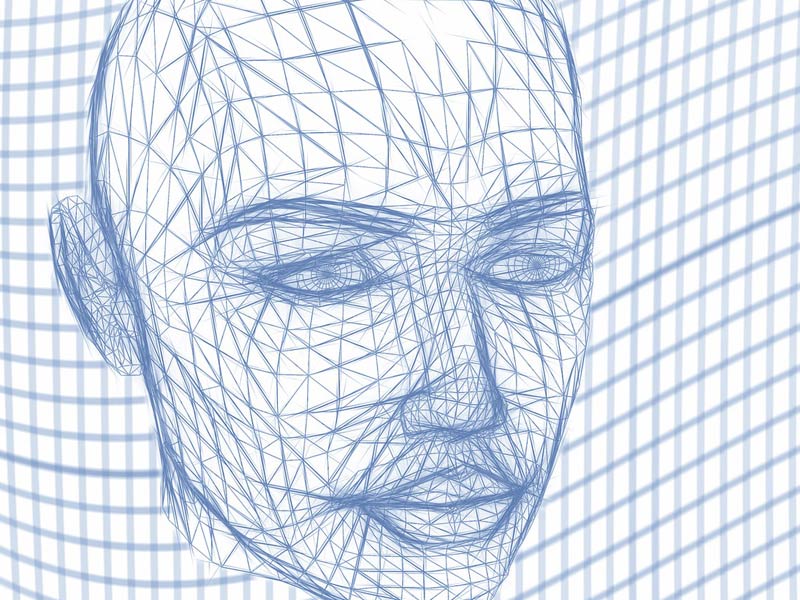
The core principle behind this transformative technology lies in sophisticated AI algorithms that analyse visual data from one or more photographs. When tasked with turning a photo to 3D model, these algorithms don’t just “stretch” the image; they interpret depth, texture, and spatial relationships. By identifying key features, edges, and variations in light and shadow, the AI constructs a topographical understanding of the depicted object. This complex process allows the software to infer geometric information that isn’t explicitly present in a flat image, paving the way for a rich and accurate 3D model. The more visual information provided, typically through multiple photographs taken from different angles, the more robust and detailed the resulting 3D model will be.
One of the most significant advantages of using AI for photo to 3D model conversion is the sheer speed and efficiency it offers. Traditional 3D modelling, whether through manual sculpting or CAD design, can be incredibly time-consuming and requires a high level of technical skill. AI-powered tools, on the other hand, can process images and generate a preliminary 3D model within minutes, sometimes even seconds, depending on the complexity of the input and the processing power available. This rapid turnaround is invaluable for prototyping, quick visualisation, and iterating on designs without significant time investment. The democratisation of the photo to 3D model workflow is truly empowering.
The applications for this technology are vast and varied. In e-commerce, businesses can now offer customers an immersive experience by allowing them to view products as interactive 3D models directly from product photos. This enhances consumer confidence and reduces returns, as shoppers get a clearer understanding of what they are purchasing. Architects and interior designers can convert sketches or photographs of existing spaces into 3D models for renovation planning or client presentations. Even hobbyists and artists can benefit, turning personal photographs into unique 3D printable objects or digital assets for creative projects. The potential for a high-quality photo to 3D model is truly boundless.
The underlying technology that powers the transformation of a photo to 3D model often involves techniques such as photogrammetry, which has been significantly enhanced by AI. While photogrammetry traditionally requires careful photographic capture and meticulous alignment, AI streamlines much of this process. Machine learning models can automatically detect corresponding points across multiple images, correct for lens distortions, and reconstruct the scene with remarkable accuracy. Furthermore, AI can assist in cleaning up noise, filling in missing data, and optimising the mesh of the generated 3D model, ensuring a smoother and more usable output. This intelligent assistance makes the journey from photo to 3D model far more accessible.
Another exciting aspect of AI in photo to 3D model generation is its ability to handle complex textures and materials. Unlike purely geometric reconstruction, advanced AI can analyse surface properties such as reflectivity, specularity, and colour variations from the input photographs. This allows the generated 3D model to not only have accurate geometry but also a highly realistic appearance, mimicking the original object’s material qualities. Imagine taking a photo of a wooden antique and having the AI accurately replicate its grain and subtle sheen in the digital 3D model – this level of fidelity significantly elevates the utility of the photo to 3D model pipeline.
For professionals in fields like historical preservation or cultural heritage, the ability to create a detailed 3D model from a photo is revolutionary. Fragile artefacts or inaccessible architectural features can be digitally documented with precision, providing researchers and educators with invaluable resources. Instead of relying solely on flat images, these experts can now interact with a faithful 3D model, examining details from every angle without risking damage to the original. This capability transforms how we study and share our past, all stemming from the power of a photo to 3D model conversion.
While the process of creating a 3D model from a photo is becoming increasingly automated, the quality of the input photographs remains crucial. Good lighting, sharp focus, and a sufficient number of images taken from various perspectives significantly contribute to the accuracy and detail of the final 3D model. AI tools are powerful, but they cannot invent data that isn’t there; they rely on the visual cues provided. Therefore, understanding basic photographic principles still plays a role in maximising the potential of these AI-powered applications. Taking the time to capture high-quality images will always yield superior results when performing a photo to 3D model conversion.
Looking ahead, the evolution of AI tools for photo to 3D model generation shows no signs of slowing down. We can expect even greater automation, improved accuracy, and the ability to handle more challenging input scenarios, such as moving objects or highly reflective surfaces. The integration with augmented reality (AR) and virtual reality (VR) environments will also become more seamless, allowing users to instantly convert real-world objects into digital assets that can be placed and interacted with in immersive experiences. The future of photo to 3D model technology promises even more innovation and utility.
In conclusion, the advent of AI tools has irrevocably transformed the landscape of 3D modelling, particularly in its ability to generate a 3D model from a photo. What was once a niche, laborious task is now accessible to a broader audience, fostering innovation and efficiency across countless domains. From design and retail to heritage and education, the power to translate a flat image into a tangible, interactive 3D model is proving to be an indispensable asset. As AI continues to advance, the boundary between the physical and digital worlds will become even more blurred, all thanks to the remarkable capabilities of turning a photo to 3D model. The era of effortless 3D creation from everyday images is well and truly here, redefining how we perceive and manipulate our visual world.